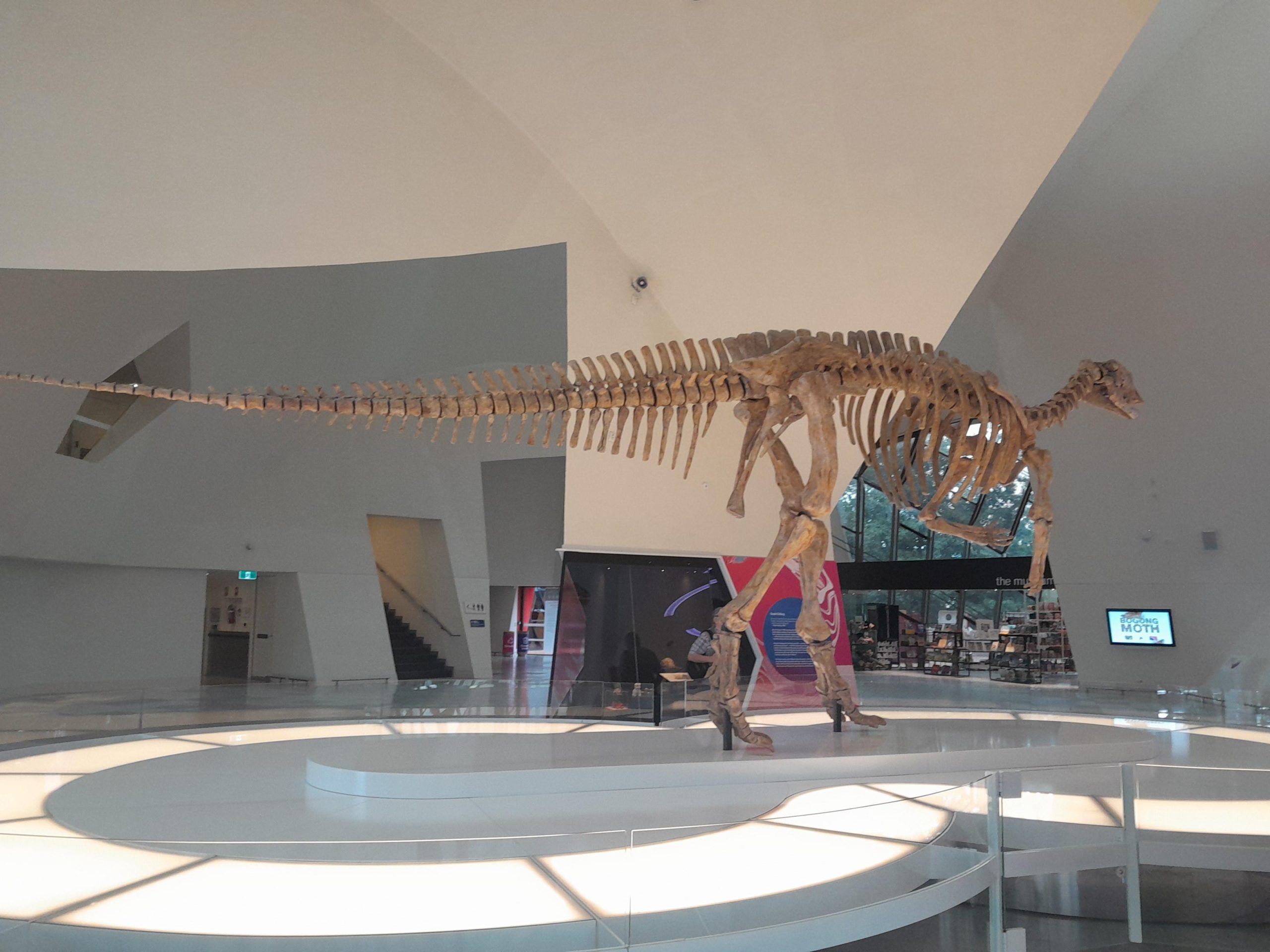
A recent visit to the National Museum Australia and a discussion on the history of the Pyramids recalled the emergence of iterative software development methods in the 1990’s
Muttaburrasaurus
Anywhere between 100 million and 110 million years old. Not only is 100 million years a completely unimaginable period of time but the variation in the measurement is also unimaginable. There is a ten per cent or so variation in the value depending on how calculated which is of course very significant in itself but it is an enormous period of time. What on earth does 10 million years mean?
The difficulty of the human conceptualism of time was further illustrated in a discussion lead by Associate Professor Ash Lenton in the Masters of Applied Cybernetics course at the ANU, 26th February 2026, considering “Languages and Perspectives”.
The subject under discussion was “The Great Pyramid of Giza – Pyramid Tomb of the Pharaoh Khufu” c. 2,600 BCE – that is to say around four and a half thousand years ago. Who would claim to truly know the consequence of this observation?

Not those it seems responsible for the crazy fictions about “Aliens” or at least those that wish to transmute breezy entertainment into serious explanatory narratives.
Scholarship as described by Prof. Lenton revealed the iterative refinement of the “Pyramid” from the Shaft & Chamber Tombs, Xemxija, Malta 6000 – 4000 BCE through various forms of increasing engineering sophistication and stylistic refinement including:
Mastabas, Tarkhan c. 3100 BCE
Step Pyramids, Saqqara c. 2630 BCE
Step Tombs, Saqqara c. 2700 BCE
to the familiar manifestation at Giza. The time taken for this process is at least circa 2,500 years given the difficulty in the measurement of building age; staggering.
In the late 1990’s, an advocate for DSDM a formalised iterative development methodology, Paul Taylor then of British Telecom, while visiting Sydney, Australia used the illustration of “Going to the Moon” to describe the benefits of the approach. His story started with the Montgolfier Brothers in 1783 with their Hot-air Balloon and ended with Neil Armstrong aboard Apollo 11 in 1969 a period of nearly 200 years.
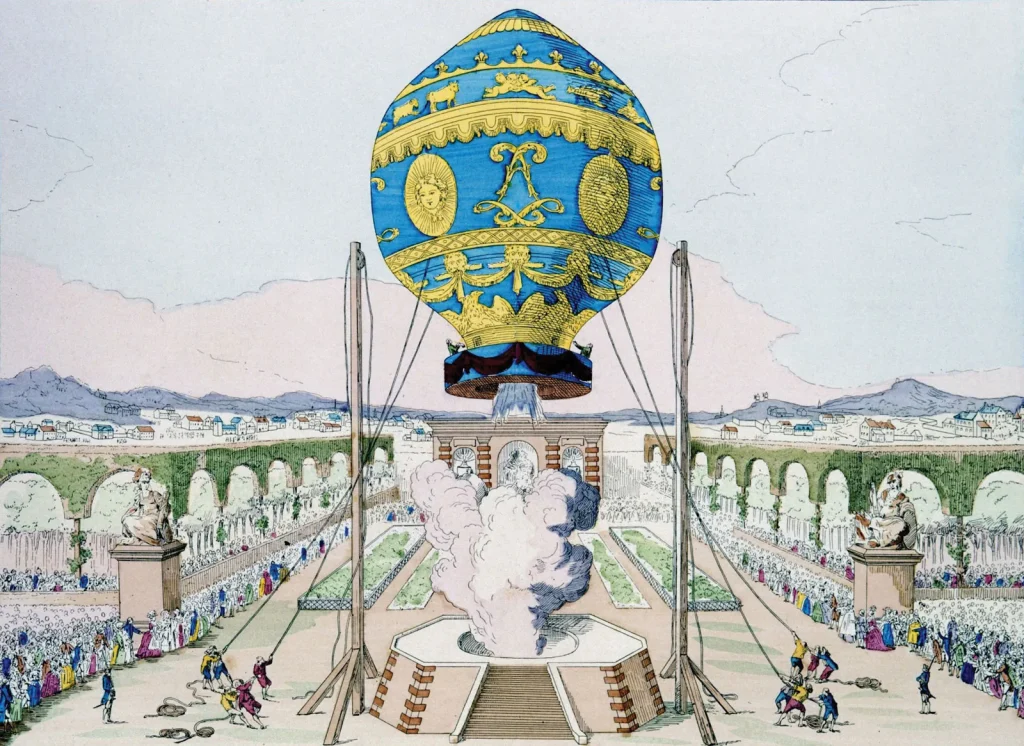
Montgolfier Brothers in 1783 – first steps to the moon

Neil Armstrong in 1969 – “One small step for a man, one giant leap for Mankind”
What of course is extraordinary is the compression of the evolution of innovation – from thousands to hundreds of years.
Will future people’s regard the claims for space flight as far-fetched, their perspective misled by the astonishing effect of iteration through time, their attention attenuated into the millisecond life-cycle scale of digital transformation?
Leave a Reply