Category: Digital transformation

  • Stewardship, Steering and Control

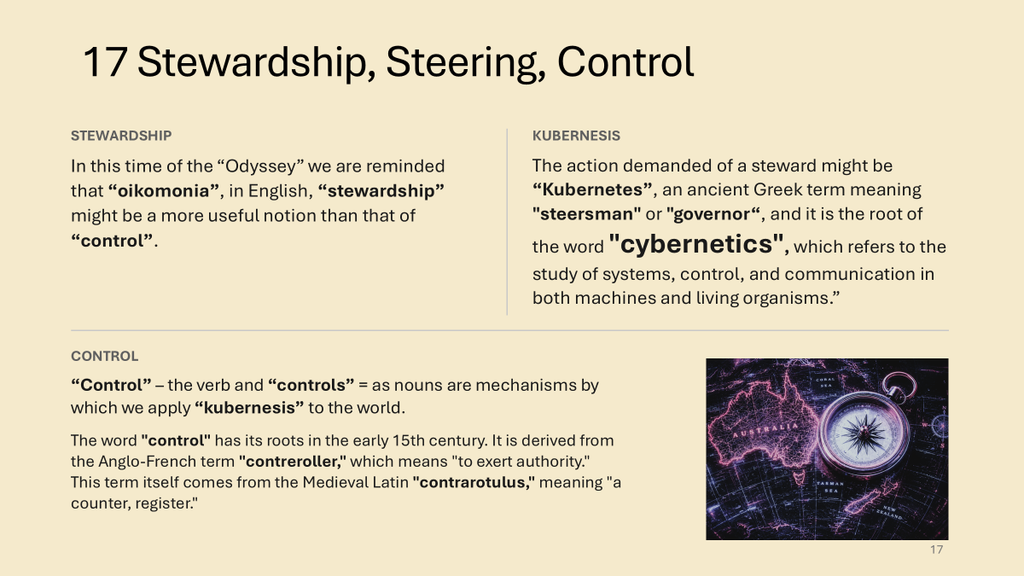
    Stewardship, Steering and Control

    The end of the function?

    A mathematical function will, by definition, deliver the same result from the same inputs at all times.

    Schematic depiction of a function described metaphorically as a “machine” or “black box” that for each input yields a corresponding output (https://en.wikipedia.org/wiki/Function_(mathematics))

    “AI” proposes that the function is no longer the sole foundation of the digital computing machine and its purpose. There is now an alternative probablistic paradigm. What is to be done?

    Cybernetics can help. with “AI”, the boundary of the system must be defined and fortified to encapsulate processing as an independent activity. A quarantine must be established.

    Why?

    Within the boundary, can an “AI” function be discerned over which control can prevail? No, because it is not possible to predict the outcome of an “AI” engine process from a given set of inputs and it is not possible to know all the potential outcomes that might result from a given set of inputs into this “AI” engine.

    We must follow the Greek not the Latin.

  • Steering through the Information Age: Why the Role of the CIO is Evolving

    Steering through the Information Age: Why the Role of the CIO is Evolving

    Digital transformation has become a catch-all term for modernization, but for technology leaders (now including the CEO), the reality is far more complex. It isn’t just about adopting AI or migrating to the cloud; it is about steering, in this case, a complex, highly-regulated and visible institution through continual and disruptive change. How to handle governance while simultaneously fostering innovation? How do you move beyond the hype of AI to find productive utility?

    In this exclusive masterclass series, we are stripping back the buzzwords. We are bringing together frontline executive expertise from the Commonwealth Bank of Australia (CBA) and the rigorous, systems-focused research from the ANU School of Cybernetics to provide a masterclass in executive leadership for our Information Age.

    Our masterclass is a workshop on the mechanics of transformation. Attendees will gain:

    • Frontline CBA Insights: Understand how the Commonwealth Bank delivered its Integrated Development Platform (IDP) and the governance lessons learned from one of Australia’s most complex digital environments.
    • The Cybernetic Framework: Move beyond simple project management. Learn to view transformation as a cybernetic system—where feedback loops, accountability, and controls are the true drivers of sustainable success.
    • AI Tooling Reality Check: Cut through the noise. Identify the “good, the bad, and the ugly” of current AI implementations and learn how to identify productive utility in your own deployments.
    • Strategic Design: Discover why the CIO must evolve into a lead architect of business strategy, ensuring technology is not just a service provider, but a core component of organizational resilience.
    • Practical Governance: Master the art of maintaining strict discipline and accountability in highly regulated environments while still enabling your teams to innovate rapidly.
    • Exclusive Networking: Engage with peers, experts from the ANU School of Cybernetics, and industry veterans to share experiences and build your roadmap for the future.

    Event Details:

    • Canberra Masterclass: Thursday, 17th September 2026 | 12:00 PM – 2:00 PM | The Innovation Space, Birch Building, ANU Campus.
    • Sydney Masterclass: Thursday, 22nd October 2026 | 12:00 PM – 2:00 PM | Australian Institute of Directors, 1 Martin Place, Sydney.

    Why Attend?

    Whether you are a CIO, a technology executive, or an aspiring leader, this masterclass provides the precise toolkit required to lead with clarity. By examining the cybernetic nature of transformation, you will leave with a roadmap for managing complex, integrated systems—and the confidence to steer your organization effectively through the unexpected challenges of the future.

    Register for our Digital masterclasses in Canberra and Sydney here

  • Managing Claude

    Managing Claude

    Never has close attention to Software Delivery Life Cycle (“SDLC”) practice been more vital for the delivery of the expected.

    In a recent evaluation exercise, “Claude Code” was used for the generation of program source code in two refactoring cases at the ANU.

    1. A set of python scripts used for the modelling of the behaviour of cybernetic processes was upgraded to include setpoint seeking behaviour.
    2. Source from two Flutter/Dart applications was integrated to deliver a combination of functionality in a single App.

    “Claude Code” provides a dissembling emulation of Oraclesque infallibility in its sessions, amplified by the dweebish persona to which it seems attached. The vexing insistence of its use, necessary or not of technical jargon does little to dispel the notion of “black magic”, its promise to investors. We know by the nature of the engine that this must a conscious choice of the owner.

    However, its competence is formidable.

    In case 1, a set of nine algorithms was proposed by Claude Code, to meet the requirement, each described and then cast against the existing source at the behest of the prompt. On confirmation, these algorithms were refactored into the appropriate function within the python source, on the instruction of the prompt. Breathtaking. However, an existing bug was reported within the source, a bug that did not exist.

    In case 2, what would have been a straightforward task of functionality integration if the original applications had been built to tried and tested software engineering principles was a challenging exercise for the uninitiated. The task of modification without Claude Code was frankly incomprehensible. Nevertheless, the functionality required was cast with a single prompt but with a bug that was addressed with a second prompt. So far so fantastic. Slightly disturbing? The complexity of Claudian outputs, that frankly perhaps only Claude can interpret. You’re locked in.

    In conclusion, Claude delivers. What is clear though is that modularity and iterative prototyping have never been more valuable both for the swift delivery of the right functionality and the accuracy of the delivered object performance. The specification of a module is its test specification.

    To avoid the unexpected and the ruin of assumptions, keep it simple and plug it together around the information flow.

    Giant blob prompts are out.

  • Solidarity

    Solidarity

    For decades, by many means, fair or foul, personal information (as per the Australian Privacy Act 1988) has been extracted from the individual for commercial and state actor purposes.

    Sometimes, there is an exchange of value with the person, most times, there is not.

    Change reveals. How many banks have I contacted? How did I contact them? Did they open the letter they requested? What’s my address? Why are they asking me these questions?

    I’d like to rent a flat? Well, you can if you give us unlimited access to your personal information plus details of your financial circumstances and let us do whatever we like with it.

    When you question this rather unfortunate imbalance, then here’s an “AI” generated e-mail of several pages in length that you may or may not wish to read and comprehend but the message is pretty unequivocal.

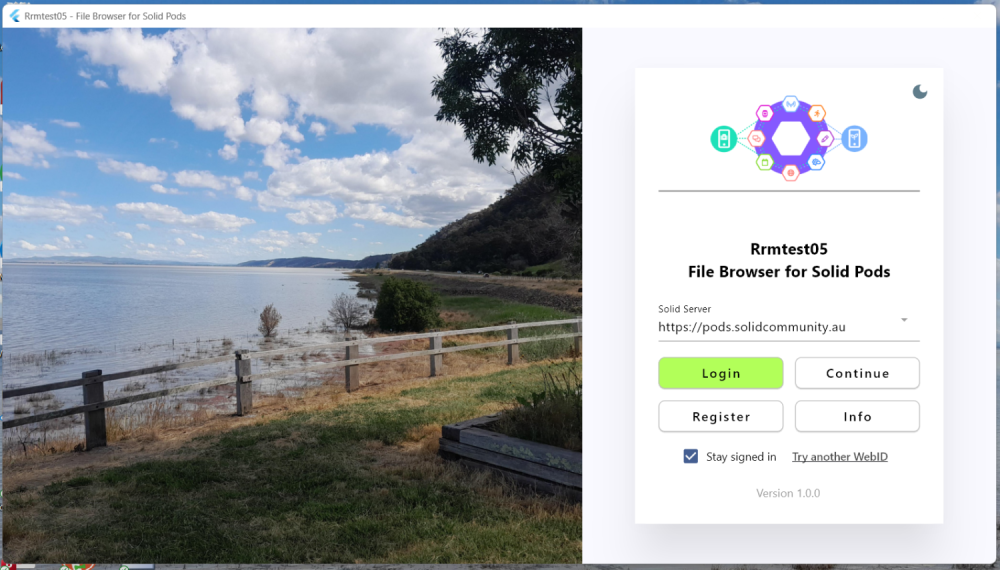
    There’s an alternative emerging that grants agency to the person.

    Makes life easy too.

    Come along to the Hackathon in Canberra and find out for yourself.

    https://solidcommunity.au/hackathon-2026-article.html

    Reading

    https://www.legislation.gov.au/C2004A03712/latest/text

    https://solidproject.org

  • Systems changing Systems

    Systems changing Systems

    Cybernetic effects from the introduction of an Integrated Development Platform (“IDP”) at the CBA offer further promise of productivity improvements.

    In this fourth conversation, Des and Gareth consider the technology categories and specific applications required to deploy “platform engineering” in DevOps at the Commonwealth Bank of Australia (a highly visible, regulated institution).

    Bullet points?

    1. Commodification of Regulation in an “Opinionated” platform.
    2. CPS 230 – What is your vendor exposure? An articulation of good practice for buyers of I.T. services.
    3. Cloud – benefits, costs, P/L and Balance Sheet. Beware the concentration.
    4. The emergance of an iterative development process from new deployment efficiencies.
    5. What does this mean for the front-end inputs? Systems can change Systems in a cybernetic feedback effect.

    Media

    Vision delayed a tad in the recording below . . .

    Des Seeley and Gareth Davies discuss the technology of the Integrated Development Platform “IDP” at the CBA (Video and Audio)

  • “Meshing the Gears” – the “How” of Digital Transformation

    “Meshing the Gears” – the “How” of Digital Transformation

    In our third iTWire research (27th February 2026) conversation with Desmond Seeley, Delivery Executive at the Commonwealth Bank of Australia #CBA, the nitty-gritty of Digital Transformation in the DevOps function of a complex institution is considered.

    In our previous conversations, the “Why” and “What” of Digital Transformation in DevOps was discussed. At the #CBA, “Platform Engineering” has been identified as the required solution, based in part on the Google Model a significant extrapolation of the “portable” operating system.

    In this conversation, Des describes in detail the juggling exercise required to align a number of separate initiatives and priorities, perhaps half a dozen along a common path….and keep them there.

    Many of the ideas will be familiar though possibly under-appreciated in the zeitgeist and can be generally applied – iterative development, modular component delivery, identification of an early-adopter (“guinea-pig” or “champion” ?), marketing and selling the approach, essential where there is an element of “deferred gratification” where funds are allocated to the development of an “productive asset”, an engine that will deliver improved future results.

    How do you mesh the gears?

    Note for listeners and viewers – momentary glitch between 8.00 and 9.00 minutes in after which normal service is resumed !

    Video: Meshing the Gears (Video) – The How of Digital Transformation

    Audio: Meshing the Gears (Audio) – The How of Digital Transformation

    Further Reading

    The classic work on innovation and the adoption cycle:

    “Diffusion of Innovations” 5th edition, Everett M. Rogers ISBN: 9780743222099